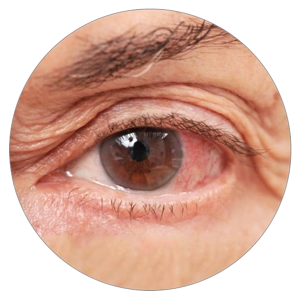
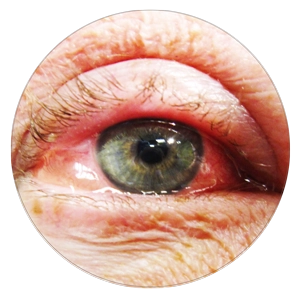
Weeping Eyes (Epiphora) or watery eyes, weeping tears is caused by excessive tear production and/or poor tear drainage.
• It is common to temporarily produce excess tears when you are emotional, laughing, coughing, vomiting, experiencing strong taste sensations, or yawning.
Types of Tears
1) Basal Tears – The tears work as the First line of defense that shield the sensitive eye surface from incoming dirt and debris, forming a protective film over the Cornea. Besides providing a barrier between the eyes and the external elements, these tears are essential for moistening and nourishing your Cornea.
2) Reflex Tears – The tears are secreted by the eyes lacrimal glands as a defensive response against environmental Irritants that may disrupt the integrity of the Cornea. The eyes become flooded with reflex tears to wash away the invading agent (such as foreign bodies) that get lodged into the eyes or chemical Irritants present in smoke and Onion fumes. The lacrimal glands go into overdrive when they pick up on the presence of such irritants, and they secrete a larger amount of reflex tears than basal tears, which leads to excessive tearing. These reflex tears are known to contain a heavy dose of anti-bodies to fight off pathogens.
Causes of Weeping Eyes (Epiphora)
• Excessive tear production caused by irritation or inflammation of the surface of the eye. This can occur for a number of reasons, including eyelash and eyelid problems or allergies
• Poor tear drainage which occur when the eye‘s tear drainage channels can’t drain a normal volume of tears. This can be caused by a blocked tear drainage duct, narrow or displaced tear drainage openings (puncta), or lax eyelids.
• Weather conditions (such as dusty weather, wind, cold, and sunshine)
• Eye strain
• Environmental factors (such as bright light and smog)
• Common cold, sinus problems, and allergies
• Blepharitis (inflammation of the eyelid)
• Eyelid turned outward (ectropion) or inward (entropion)
• Ingrown eyelash (trichiasis)
• Pink eye (conjunctivitis) or other infections
• Blocked tear ducts
• Foreign objects, chemicals, or irritating gases and liquids in the eye
• Injury (such as a cut or scrape on the eye)
• Some prescription medications
• Cancer treatments (including chemotherapy and radiation)
• Over-production of tears due to irritants such as some chemicals (such as fumes, and even onions)
• Keratitis (an infection of the cornea)
• Corneal ulcer (an open sore that forms on the eye)
• Styes or chalazions (lumps that can grow on the edge of the eyelid)
Symptoms of Weeping Eyes (Epiphora)
• Weeping Eyes
• Reduced vision
• Pain or swelling around the Eyes
• A feeling that something is in the Eye
• Persistent redness in the Eye
• Eyes tend to become increasingly irritated and may even turn red
• Eyelids may become swollen
• Experience a burning sensation in the Eyes
• Eyes may start to itch
• Break into frequent sneezing spells
• Eyes may become increasingly sensitive to light
• Eyes can be painful if the condition is brought on by some sort of ocular trauma or injury
• Eyes may feel extremely tired, heavy, and sore
• Vision may become blurry
• Increased Eye discharge.

Preventive Tips for Watery Eyes
• Rest the Eyes from time to time to prevent Straining, prolonged exposure to the blue-light emission from LED screens.
• Adhere to the doctor-stipulated standards of hygiene to prevent contaminating the Eyes, when dealing with a child who has an ongoing Eye Infection.
• Immediately discard any gauze or Cotton balls that have been used in cleaning or medicating the child’s infected Eye.
• Do not wash used child’s linens and towels along with the family’s laundry, as they can contaminate the entire stock. It is recommended to keep the child’s linens separate and also wash them separately in hot Water to weed out the Infection.
• Separate clothings for adults who have viral Conjunctivitis as the Infection can spread quite easily.
• Do not use contact lenses if you have dry Eyes as these can add to the ocular discomfort and make their condition worse.
• Replace your contact lens solution after every use or if you use disposable lenses during an Eye Infection, then you must throw them away once the condition clears.
• Make sure to clean extended-wear lenses as directed by the Eye specialist/optician/ophthalmologist.
Watery Eyes in Children
• Watering Eyes in children (both Eyes) is common simply because they have a tear duct that is slightly narrow.
• In 90% of these Infants the tear duct will widen by itself before they are 12 months old and the Eyes will stop Watering.
• The most common cause is congenital nasolacrimal duct obstruction (CNLDO), which represents a delay in the maturation of the nose and lacrimal system rather than a fundamental structural problem.
Home Remedies for Watery Eyes
• Do not rub your Eye – Rubbing the Eye when you have a particle stuck in it may aggravate the discomfort and even lead to ocular damage.
• Observe good hand hygiene – Make sure to touch the Eyes only with clean, sanitized hands.
• Use gentle heat therapy – If your Eyes have turned extremely watery due to a blockage in the tear duct, placing a warm compress on the affected Eye may help relieve some of the discomforts. The mild heat may help relieve the Congestion in the tear duct and facilitate the drainage of the excess tears.
• Wear contact lenses with caution – Make sure to remove contact lenses before going to sleep and even before a short nap.
• It is best if you avoid wearing contact lenses when swimming or showering.
• Cover your Eyes with protective Eyewear – Wear protective sunglasses to shield your Eyes from airborne debris and particles when venturing outdoors, more so if the weather is particularly windy or cold.
• Its best to wear dark sunglasses to keep Watery Eyes (which tend to be extra photosensitive) comfortable in sunlight. Ask your optometrist to recommend appropriate Eyewear for this purpose.
• Clean Eyewear – Make sure to wipe your sunglasses and spectacles before putting them on as wearing unclean Eyewear can transfer the dust and other grime to settle on it.
• Keep Eyewear and Eye products for personal use only – Its recommended to keep Eye makeup and other Eye products restricted to personal use, inorder to minimize the risk of Eye Infection.
• Use a mild Eye cleanser – Rose Water has found great use in remedying a wide array of eye-related problems and works as a gentle Eye tonic. The efficacy of Rose Water in the prevention and treatment of ocular Infections (such as Conjunctivitis) can be attributed to its inherent analgesic and anti-septic properties.
• Frequently rinse your Eyes.
Herbal Remedies of The Treatment of Watery Eyes (Weeping Eyes)
1) A helpful mixture of: Eyebright (10gm), Valerian (10gm), Avens (15gm), Lilac Blossoms (10gm), Lady’s Mantle (15gm), German Chamomile (20gm), Rue (10gm)
2) 15gm of this herb mixture are soaked in 1/2 litre of cold Water overnight and the next morning boiled, stirred, taken off the hotplate and infused for 3 minutes.
3) When somewhat cooled, a piece of linen is soaked in the infusion and while still warm, applied to the closed Eyes. This is repeated several times for half an hour.
4) Afterwards a dry cloth is applied and the Eyes are rested for a while.



Clinical Treatment for Watery Eyes
• Eye Drops – Lubricating Eye drops to soothe the ocular surface, if the excessive tearing is caused by dry Eyes.
• Medication – The doctor may prescribe a course of Anti-Biotics to address the root problem, if your Eyes are Watering due to an underlying Eye Infection, an Allergies, and anti-histamines.
• Punctal Plugs – Blocking one or both of the punctum (drain) help retain the tears the glands produce.
• Surgery – Surgery may be recommended to create a new drainage outlet for the tears, if a blocked tear duct is responsible for the excessively Watery Eyes. Dacryocystorhinostomy (DCR)- Its a type of surgery involving the making a small incision under the inner Corner of the Eye, next to the nose. The surgeon then cuts deeper into this Skin incision to create a short passage through the nasal Bone and sometimes insert a tube within it to keep it from getting congested in the future.
Food Remedies for Weeping Eyes
Herbal Remedies for Weeping Eyes




• Babul – Babul Eyewash is beneficial to Conjunctivitis and other Eye problems. The leaves of Babul tree are very effective for Conjunctivitis by eradicating pain and redness. Babul leaves treats Watering in the Eyes (Epiphora).
• Catalpa – Catalpa tree pods distilled Water, mixed with commonly used Eye problems treatment herbs (such as Eyebright and Rue) is an effective and a valuable Eye lotion in the treatment of trachoma and Conjunctivitis, and also an Eyewash for other Eye Infections. Its leaves juice is beneficially used as a local application in the several forms of strumous ophthalmia, and in certain cutaneous affections.
• Ju Hua – Ju Hua flower heads tea is a refreshing tisane useful to the improvement vision, soothe sore Eyes, relieve Headaches, counter Infections etc. Ju Hua tea improves the sharpness of vision and considered as one of the best methods to cure various Eye problems.
• Tree-of-Heaven – Tree-of-Heaven Fruits are useful in the treatment of ophthalmic diseases. Its beneficial in curbing troubles relating to Eyes (such as Conjunctivitis, burning sensation in the Eyes causing pain and blurry vision [due to purulent discharge]).