Search Results for: Healthy Remedies

Baths (Balneotherapy)
Baths (Balneotherapy) is the use of hot water for therapeutic purposes. Fragrant, Relaxing Bath Herbs Lavender Rosemary German Chamomile Elder Lemon balm Linden Sedative Bath Herbs Lavender Valerian German Chamomile Cramp Bark Linden Bath Herbs for Children and Babies Bath Herbs for Children (with sleep problems) and Babies (who are teething) German Chamomile Linden Red Clover Stimulating and Bath Herbs Yarrow Ginger Cayenne Rosemary
More on Details
Whitlow
Whitlow is an abscess or infection in the soft tissue near a fingernail or toenail or a purulent infectious (highly contagious) disease of the skin affecting the deeper tissues that surrounds the fingernails (or toenails) and causing inflammation (or pain and small blisters [forms pus] on the affected region). It occurs if the broken skin comes in contact with the cold sores or genital lesions. It often resolves without treatment in 2-3 weeks. Categories of Whitlow 1) Herpetic Whitlow – Its a condition caused by Herpes Simplex virus on finger or thumb. It is a painful Infection oftenly occuring on toes or nail cuticle. 2) Melanotic Whitlow – Its a melanoma beginning in the skin at the border or beneath the nail. General Information Causes of Whitlow Causes of Whitlow • Bacterial Infection on the fingertip. • Herpes simplex virus Infection on the fingertip – Herpes Simplex Virus (HSV). HSV 1 and HSV 2 are common and highly communicable viruses. […]
More on Details
Weeping Eyes
Weeping Eyes (Epiphora) or watery eyes, weeping tears is caused by excessive tear production and/or poor tear drainage. • It is common to temporarily produce excess tears when you are emotional, laughing, coughing, vomiting, experiencing strong taste sensations, or yawning. Types of Tears 1) Basal Tears – The tears work as the First line of defense that shield the sensitive eye surface from incoming dirt and debris, forming a protective film over the Cornea. Besides providing a barrier between the eyes and the external elements, these tears are essential for moistening and nourishing your Cornea. 2) Reflex Tears – The tears are secreted by the eyes lacrimal glands as a defensive response against environmental Irritants that may disrupt the integrity of the Cornea. The eyes become flooded with reflex tears to wash away the invading agent (such as foreign bodies) that get lodged into the eyes or chemical Irritants present in smoke and Onion fumes. The lacrimal glands go into […]
More on Details
Weak Bladder
Weak Bladder means weaking of the urinary bladder (a muscular sac in the pelvis, just above and behind the pubic bone which stores urine, allowing urination to be infrequent and voluntary). During urination, the bladder muscles contract, and two sphincters (valves) open to allow urine to flow out. • When empty, the bladder is about the size and shape of a pear. • Urine exits the bladder into the urethra, which carries urine out of the body. Because it passes through the penis, the urethra is longer in men (8 inches) than in women (1.5 inches). Bladder Conditions • Cystitis – Inflammation or Infection of the bladder causing acute or chronic pain or discomfort or urinary frequency or hesitancy. • Urinary stones – If calculi (stones formed in the kidney) block urine flow to or from the bladder, they can cause severe pain. • Bladder Cancer – A tumor in the bladder is usually discovered after blood is noticed in […]
More on Details
Warts
Warts are small/benign, rough, and hard skin growths (non-cancerous) that appear when a virus infects the top layer of the skin. Its also refered to as a harmless skin growths caused by the human papillomavirus (HPV). • Verruca Vulgaris – Verruca vulgaris are common wart caused by human papillomavirus infection (HPV). • Condyloma Accuminata – Condyloma acuminata are anogenital wart caused by human papillomavirus infection (HPV). General Information Causes of Wart • Viruses that cause wart is called human papillomavirus (HPV). • Wart viruses are contagious and can spread by contact with the wart or something that touched the wart. Symptoms of Wart • Small/benign, rough, and hard Skin growths (not Cancerous). Simple Tips for Wart Simple Tips for Wart • Don’t let moisture to retain in the areas such as under knees, genitals, penis, and vagina as most of the germs that cause Wart are produced by moisture accumulated in the areas. Always dry your body with clean soft […]
More on Details
Urinary System Diseases in Elders
Urinary System Diseases in Elders (older adults) such as Urinary Tract System Infection and Asymptomatic Bacteriuria are common. Distinguishing symptomatic Urinary Tract System Infection from asymptomatic bacteriuria is problematic (unlike in younger adults), as older adults, particularly those living in long-term care facilities, are less likely to present with localized Genitourinary symptoms. Over-treatment with Anti-Biotics for suspected Urinary Tract System Infection remains a significant problem, and leads to a variety of negative consequences including the development of multidrug-resistant organisms. Urinary System Diseases in Elders a) Asymptomatic Bacteriuria (ASB) – Asymptomatic bacteriuria (ASB) is a common occurrence in older adults, defined as the presence of bacteria in the urine, without clinical signs or symptoms suggestive of a Urinary Tract System Infection (UTI). Asymptomatic pyuria is defined as the presence of white blood cells in the urine, in the absence of Urinary Tract System specific symptoms. b) Urinary Tract System Infections (UTIs) – Urinary Tract System Infections (UTIs) are the second most […]
More on Details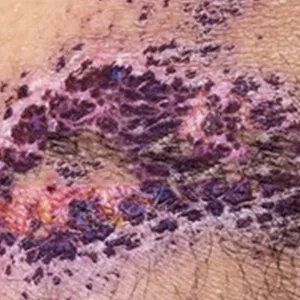
Scab
Thick Eye Coating (Scab) is a dry, rough protective crust that forms over a cut or wound during healing. Scabs are protective crusts of dried blood clots that form over wounds as a result of scrapes, acne, an allergic reaction, or another illness. It allows the body to protect itself from viruses and bacteria that may enter through an open wound. Scabbing is a natural reaction. Its best to avoid scratching scabs open, as this can lead to more bleeding, increase the chance of infection, and may increase the likelihood that a scar will remain after the wound itself has healed. General Information Causes of Thick Eye Coating (Scab) Causes of Scab (thick eye coating) a) Traumatic causes • Abrasions/Scabbing or injury to the to the skin • Blisters • Bug bites • Burns • dry Skin that causes cracking • Insect bites • Lacerations • Lesions • Scrapes (cuts a person gets on their face) b) Disease causes • […]
More on Details
Stings
Stings are painful and irritating bite by an insect, pest or bee that leaves a lump/bump on the skin, and sometimes poisonous. Keys to Preventing Stings • Avoid wearing bright colours, scented perfume, or Hair sprays. • Remember bees and wasps only Sting humans to protect their Hive and when bothered. • Get away from bees and wasps by walking quickly. Immediate Home Remedies for Stings • Ice – Ice is a great remedy for soothing any bites and Stings, as the cold helps to diminish the itch, reduces the inflammation or swelling and eases the pain. Place crushed ice into a small sandwich bag, wrap in a towel and place over the affected area until the Skin feels calmer. • Aspirin – It will eliminate the toxins released that are present in the affected area, reducing the level of inflammation and healing the bite faster. It also contains acetylsalicylic acid which relieves pain. To use, simply crush two tablets […]
More on Details
Sprains & Strains
Sprains & Strains are common orthopedic injuries. • A Sprain is an injury (abnormal stretching or tearing) to a muscle or Tendon ligament (a band of tissue that connects muscle to Bone) that supports a joint. • A Strain is usually the result of overstretching or overuse of muscles and Tendons (torn muscle or muscle pull). Degree of Sprains First Degree Second Degree Third Degree 1) First Degree Sprain (Mild) – Its the stretching of the ligament fibres, although it remains intact. 2) Second Degree Sprain (Moderate) – Its the tearing of the ligament fibres part, from a third to almost all its fibres. 3) Third Degree Sprain (Severe) – Its the complete rupturing of the ligament fibres, sometimes avulsing a piece of bone. General Information Causes of Sprains Strains Causes of Sprains & Strains • Ankle – Walking or exercising on an uneven surface, landing awkwardly from a jump. • Knee – Pivoting during an athletic activity. • Wrist […]
More on Details
Skin Diseases in Elders
Factors Associated with Skin Ageing Internal Factors Associated with Skin Ageing • Reduction in Skin cell turnover. • Impaired Skin barrier function. • Impaired Immune System response. • Reduction in subcutaneous fat. • Impaired thermoregulation. • Decreased vascularity. • Decreased sebaceous and Sweat gland activity. • Decreased sensory perception. External Factors Associated with Skin Ageing • UV exposure. • Environmental pollution. • Smoking. • Lifestyle factors (sleep, stress, diet) Phytotherapy and The Elderly • Largely Unalterable Manifestations of Aging • Far-sightedness • Fibrosis and stiffening of arteries • Graying of Hair • High-tone hearing loss • Loss of Skin elasticity Skin Problems in the Elderly a) Appearance and Texture Changes a) Appearance and Texture Changes Wrinkles – The most visible sign of aging Skin. Laugh/Worry/Facial movement lines – Horizontal lines on the forehead, vertical lines above the nose, or curved on the temples, upper cheeks, and around the mouth and Eyes. Dry and itching Skin – Show loss of oil […]
More on Details
Respiratory System Diseases in Elders
Respiratory System Diseases in Elders (Old Age) • Asthma – Its a common, chronic Respiratory condition that causes difficulty breathing due to inflammation of the airways. • Chronic Obstructive Pulmonary Disease (COPD) – Its an umbrella term that encompasses several Respiratory illnesses that cause breathlessness (shortness of breath or the inability to exhale normally) and normally Cough up sputum (mucus from the lungs), especially in the morning. • Chronic Bronchitis – Its a form of COPD emphasized by a chronic Cough, because mucus glands in the airways increase output, and patients have to Cough that extra secretion out. • Emphysema – Its a serious Respiratory disease, most commonly caused by Smoking. • Lung Cancer – The Cancer develops in the main part of the lungs near the air sacs. • Cystic Fibrosis/Bronchiectasis – Its a genetic Respiratory disease caused by a defective gene that creates thick and sticky mucus that clogs up tubes and passageways. The mucus causes repeat, and […]
More on Details
Reproductive System Diseases in Elders
Reproductive System Diseases in Elders The Reproductive System is a collection of internal and external organs (in both males and females) that work together for the purpose of procreating. Phytotherapy and The Elderly • Largely Unalterable Manifestations of Aging • Far-sightedness • Fibrosis and stiffening of arteries • Graying of Hair • High-tone hearing loss • Loss of Skin elasticity Reproductive Systems Working Mechanism • The male Reproductive System consists of two (2) major parts (the testes [where sperm are produced] and the penis). • The penis and urethra belong to both the urinary and Reproductive Systems in males. • The testes are carried in the scrotum (an external pouch, where they normally remain slightly cooler than body temperature to facilitate sperm production). • The external structures of the female Reproductive System include the clitoris, labia minora, labia majora and Bartholin’s glands. • The major internal organs of the female Reproductive System include the vagina and uterus (act as the […]
More on Details
Heat Rash
Prickly Heat (Heat Rash) is a condition of heat rash (an irritating eruption [very painful and intensely itchy] of the Skin or a swelling on the Skin which is tiny pin-head-size and accompanied by severe itching), largely caused by obstruction of the Sweat glands. The armpits, groins, chest, back and waist line are the areas which are attacked by the prickly heat. Infants and the overweight persons are the persons who usually get affected from heat rash especially when the condition is hot and humid, but can also attack the person in cold weather if anyone is overdressed. General Information Causes of Prickly Heat (Heat Rash) Causes of Prickly Heat (Heat Rash) • Obstruction of the Sweat glands. Symptoms of Prickly Heat (Heat Rash) Symptoms of Prickly Heat (Heat Rash) • Red and painful rash in Patches in certain areas of the body. • fluid filled blisters near the folds of the Skin. • Inflammation on the Skin followed by […]
More on Details
Poisoning
Poisoning occurs when people drink, eat, breathe, inject, or touch enough of a hazardous substance (poison) to cause illness or death. • A Poison is any substance that is harmful to your body, kills or injures through its chemical actions and can cause Poisoning. Poisons can enter the body through breathing, skin, IV injection, exposure to radiation, insect bites/stings and snake venom. General Information Causes of Poisoning Causes of Poisoning • Drinking Water contaminated by agricultural or industrial chemicals • Contaminated Alcoholic drinks. • Cleaning products and detergents. • Paint thinner. • Pesticides and bug spray. • Lawn chemicals (such as herbicides, fertilizers, and fungicides). • Metals (such as lead). • Mercury. • Prescription and over-the-counter medicine abuse. • Illegal drugs. • Carbon monoxide gas. • Spoiled food. • Poisonous plants/Toxidromes (such as Ivy and jimson weed). • Insects and snakes venom. • Charcoal flames • Poisonous Mushrooms • Drugs such as Beta blockers (a class of drugs used to […]
More on Details
Phytotherapy and The Elderly
Phytotherapy and The Elderly • Largely Unalterable Manifestations of Aging • Far-sightedness • Fibrosis and stiffening of arteries • Graying of Hair • High-tone hearing loss • Loss of Skin Elasticity Some Elders Health Issues Primary Actions for the Elderly • Appropriate Cardiovascular Tonics for Elders (such as Yarrow, Horse Chestnut, Garlic, Hawthorn, Ginkgo Biloba, Motherwort, Dandelion Leaves, Linden, Bilberry, Cramp Bark) • Appropriate Respiratory Remedies for Elders (such as Garlic, Pleurisy Root, Irish moss, Hyssop, Elecampane, Motherwort, White Horehound, Wild Cherry Bark, Thyme, Mullein) • The Nervine Tonics for Elders (such as Oats, St.John’s Wort, Skullcap) • Nervine Relaxants for Elders (such as Black Cohosh, Hyssop, Lavender, Motherwort, German Chamomile, Lemon balm, Linden) • Herbs for Digestive Problems in Elders (such as Agrimony, Marshmallow, Irish moss, Meadowsweet, Fennel, Gentian, German Chamomile, Peppermint, Yellow Dock, Milk Thistle, Comfrey, Slippery Elm) • Appropriate Urinary Tract System Remedies for Elders (such as Yarrow, Bearberry, Couch Grass, Cleavers, Elder, Dandelion Leaves, Cranberries Leaves) […]
More on Details
Phytotherapy & Children
Phytotherapy & Children can be quite incredible given the healing capacity of children. Conditions (such as Asthma) brought under control during childhood can often be avoided entirely during adult life, if treated successfully with herbs during childhood. Infants and children are susceptible to a wide array of ailments. Most Herbal Remedies given to children are best given as infusions in a bottle. Infusions can be flavoured with Raw Honey or maple Syrups if necessary, but they are better given unsweetened. Some Childhood Diseases 1) Children’s Constipation 2) Children’s Diarrhea 3) Children’s Respiratory Problems 4) Children’s Skin Problems 5) Cradle Cap 6) Diaper rash 7) Colic 8) Hyperactivity (Attention Deficit Hyperactivity Disorder [ADHD]) 9) Impetigo 10) Mumps 11) Indigestion in Children 12) Measles 13) Nausea in Children 14) Otitis Media Prescribing Issues Unique to Children 1) Care must be taken with Dosage for children because of smaller body size. 2) Palatability (taste and smell) is a critical factor with children medication […]
More on Details
Physical Traumas
Physical Traumas consists of twists, Bursitis, Sprains, Tendontis/Swollen Tendons, Hematomas from blows, etc. A Traumatic experience is any event in life that causes a threat to our safety and potentially places our own life (or the lives of others) at risk, resulting in a person experiencing high levels of emotional, psychological, and physical distress that temporarily disrupts their ability to function normally in day-to-day life. Examples of potentially Traumatic experiences include: • Natural disasters (such as a bushFire or flood). • Being a victim of (or witness to) a crime, act of violence or armed robbery. • Being involved in (or witnessing) a serious car or transport accident. • Being in an airplane that is forced to make an emergency landing. • Being physically assaulted. • Being exposed to images, news reports or social media posts of these types of events. Ways People React to Trauma Examples of potentially Traumatic experiences include: • Natural disasters (such as a bushFire or […]
More on Details
Phimosis
Phimosis is a condition where the baby boy penis foreskin is too tight to be pulled back over the head of the penis (glans) or the inability to retract the Skin (foreskin or prepuce) covering the head (glans) of the penis. Paraphimosis is where the foreskin cannot be returned to its original position after being retracted. Normal Development • Its perfectly normal for baby boys to have a foreskin that will not pull back (retract) in the First 2-6 years. • The foreskin of some boys can take longer to separate, but around the age of 2, the foreskin should start to separate naturally from the glans. • Phimosis is normal in babies and toddlers, but in older children it may be the result of a Skin condition that has caused scarring. Types of Phimosis 1) Congenital/physiologic Phimosis – Its present by birth, but a little manipulation for a few days may resolve the issue. 2) Acquired Phimosis – Its […]
More on Details
Otitis Media
Otitis Media is one of the most common early childhood ear Infection disease that is often the result of viral, bacterial, or yeast (rarely) infection in the middle ear (problems with the eustachian tubes in the ears). • Normally, the eustachian tube is closed and flat, preventing organisms from entering the middle ear from the pharyngeal cavity. The tube opens to allow drainage of secretions produced by the middle ear mucosa and to equalize pressure between the middle ear and the outside environment. • If drainage is impaired, normal secretions are retained, causing any air in the tube to be reabsorbed and produces negative pressure within the middle ear. • If the tube opens, the negative pressure draws bacteria into the middle ear, where they quickly proliferate. Types of Ear Infection 1) Otitis Media The ear infection affects the middle ear (right behind the eardrum). Middle ear infections are common in kids and tend to cause trouble hearing, Fevers, and […]
More on Details
Nervous System Diseases in Elders
Nervous System Diseases in Elders. Elders may suffer several Nervous System Diseases. The Nervous System is a complex, highly specialized network that controls several systems in the body such as: • Sight, hearing, taste, smell, and feeling (sensation). • Movements (voluntary and involuntary functions such as movement, balance, and coordination). • Regulates the actions of most other body systems (such as blood flow and blood pressure). • Regulates Senses (the ability to think and reason, consciousness, thoughts process, memories, and language). Phytotherapy and The Elderly • Largely Unalterable Manifestations of Aging • Far-sightedness • Fibrosis and stiffening of arteries • Graying of Hair • High-tone hearing loss • Loss of Skin elasticity Division of the Nervous System 1) The brain and Spinal cord (central Nervous System, or CNS) 2) The nerve cells that control voluntary and involuntary movements (peripheral Nervous System, or PNS). Types of Neurological Disorders • Genetic diseases caused by faulty genes (such as huntington’s disease and muscular […]
More on Details